2 hr 30 min
Tortuguero Night Turtle Nesting Experience
Walk the beach after dark to witness green and leatherback turtles emerge, nest, and return to the ocean.
Reserve
Hand-picked by our editors — only the best 5 turtle observation experiences from 18 reviewed.
Verified partners for every tour, free cancellation where available, and instant confirmation on every booking.
2 hr 30 min
Walk the beach after dark to witness green and leatherback turtles emerge, nest, and return to the ocean.
Reserve
2 hr
Witness Atlantic green turtles laying eggs on a protected Caribbean beach with expert naturalist guidance
Reserve
2 hr
Witness sea turtles lay eggs on a protected beach under cover of darkness during prime nesting season.
ReservePrices from verified partners. Availability updates in real time at checkout. Free cancellation policies apply where shown.
The landmarks, rooms, and views travelers on this tour remember — all visible on a single visit.
The primary stretch of coastline where green sea turtles lay their eggs at night. This protected area is monitored by researchers to ensure successful hatching rates.
Paths leading through the dense vegetation that provide a habitat for diverse tropical wildlife. Visitors can spot sloths and toucans while transitioning toward the coast.
A serene series of waterways that connect the village to the deep jungle. This area is the most common arrival route for those taking a tortuguero turtle hatching tour.
A central hub providing details on the local ecosystem and conservation status of the green turtle. It serves as the starting point for most guided tours.
They complement each other; most visitors who do both find the guided nest observations more focused on specific reproductive cycles while boat excursions offer broader biodiversity sightings. Selecting the right tortuguero turtle hatching tour requires balancing your interest in rare biological events against general exploration.
| Feature | Top pick Turtle Hatching Tour | Canal Wildlife Boat Tours |
|---|---|---|
Primary Focus |
Sea turtle nesting activity | Biodiversity and riparian species |
Time of Day |
Night or early dawn | Daylight hours |
Wildlife Visibility |
Low (controlled conditions) | High (diverse habitats) |
Activity Level |
Low (walking on sand) | Low (seated on boat) |
Booking Complexity |
High (advance reservation required) | Moderate (often available locally) |
Physical Demands |
Moderate (beach walking) | Minimal (seated) |
| See tickets → |
Verdict: Choose the nesting excursion for intimate, nocturnal encounters with endangered hatchlings, or opt for the boat-based tortuguero turtle hatching tour tours if you prefer daytime wildlife photography and a wider range of avian and mammalian species.
Choose your ticket, select your date, and reserve in under two minutes. Secure checkout handled by our verified partner.
Instant confirmation by email, with a mobile voucher you can save offline. No printing, no queuing at a collection desk.
Arrive at the entrance, show your voucher on your phone, and walk in. Most tickets include priority or skip-the-line access.
Practical details for your visit straight from our verified partners — hours, access, rules, and how to get there.
Tortuguero National Park, Limón
Look for certified guide signage
The primary mode of transport to access the area is by boat from La Pavona or Moin.
Buses run from San José to La Pavona, where you connect to a public boat.
Wear dark-colored clothing to avoid distracting the nesting turtles. Sturdy, water-resistant footwear is recommended for walking on sand.
Large backpacks and bulky gear are prohibited during the tortuguero turtle hatching tour. Keep personal items to a minimum for ease of movement on the beach.
Flash photography and artificial lights are strictly prohibited during any tortuguero turtle hatching tour. Using light sources can disorient hatchlings and nesting mothers.
The beach terrain is sandy and uneven, which may pose challenges for those with limited mobility. Visitors should assess their physical ability before booking a tour.
Mobile phones must be silenced and screens dimmed during the entire tortuguero turtle hatching tour. Using a phone as a light source is not allowed.
Children must be accompanied by an adult at all times during the tortuguero turtle hatching tour. Parents should ensure kids remain quiet and refrain from touching wildlife.
Food and beverages are not permitted on the beach during the turtle nesting or hatching periods. Please consume items outside the protected zones.
Pets are not allowed within the boundaries of Tortuguero National Park. This policy protects the fragile ecosystem and nesting marine life.
All visitors must be accompanied by a certified guide for any tortuguero turtle hatching tour. Group sizes are strictly regulated to minimize human impact.
Best time to go, insider tips, nearby landmarks, and the cancellation fine print — flip through to skim what matters to you.
How crowds, weather, and events shift across the year.
August is prime time for witnessing hatchlings emerging on the coast. Expect warm temperatures and occasional heavy tropical rain showers.
September remains active, though weather can be unpredictable due to seasonal changes. Wildlife activity remains high for those seeking a tortuguero turtle hatching tour.
Small details that turn a good visit into a great one.
The tortuguero turtle hatching tour sells out quickly during peak season. Secure your spot well in advance through the official site.
Certified guides have the most current information on nest locations. Follow their instructions to ensure a safe encounter for you and the turtles.
Since you will be walking on sand, carrying unnecessary weight makes the experience difficult. Only bring essential items to the beach.
Maintaining silence is crucial for a successful experience. Noise can scare away nesting mothers or disorient hatchlings.
Light colors can reflect moonlight and distract turtles. Choose navy, black, or dark grey clothing for your outing.
Non-bookable sights within a short walk — free to visit, easy to pair.
Extensive network of freshwater waterways ideal for spotting monkeys and birds. This lush ecosystem surrounds the park entrance.
A dormant volcanic hill providing panoramic views of the coastal plains. The trail is steep but rewarding for nature enthusiasts.
Educational center focused on the history of marine life protection in the region. It offers deep insights into local conservation efforts.
Flexible, no hidden fees.
Advance online booking is required for the 16.95 USD conservation fee. Cancellations must be requested via the official SINAC portal per their current guidelines.
Hand-picked options within walking distance — pick a district for vibe, or a specific hotel for convenience.
Offers various eco-lodges and family-run guesthouses within walking distance of the park.
Secluded properties designed to blend with the natural rainforest environment.
Affordable lodging options suitable for backpackers and independent travelers.
Between July and October each year, more than 22,000 green sea turtles (Chelonia mydas) return to Tortuguero's Caribbean shoreline to nest — the largest green turtle nesting colony in the Western Hemisphere. The phenomenon earned the village its name: tortuguero translates to "region of turtles," a label Miskito fishermen used long before Costa Rica designated 19,000 hectares of beach, lagoon, and rainforest as a national park in 1975. Archie Carr, the American herpetologist who founded the Caribbean Conservation Corporation here in 1959, called the site "the most important sea turtle nesting ground in the entire Western Caribbean." His four-decade tagging program revealed that Tortuguero's turtles migrate across 2,200 kilometers of open ocean, returning every two to three years to the exact beach where they hatched. Today the park protects not only nesting greens but also hawksbill, loggerhead, and the occasional leatherback — the world's largest turtle, reaching 900 kilograms and two meters in length. Night patrols operate under strict protocol: groups of nine or fewer, red-filtered flashlights only, no cameras, and a mandatory five-meter distance once a turtle begins laying. The regulations exist because artificial light disorients hatchlings, which navigate by moonlight reflecting off the ocean. A single flash can send an entire clutch toward the rainforest instead of the sea. Nesting season peaks in August, when as many as 1,800 turtles may come ashore in a single night across the park's 35 kilometers of protected beach. The hatchlings emerge 45 to 70 days after the eggs are buried. Each nest holds between 80 and 120 eggs, and when the temperature inside the sand chamber drops at dusk, the young turtles dig upward in synchronized waves. They surface together — a survival strategy that overwhelms predators through sheer numbers. Frigatebirds, coatis, and ghost crabs take a toll, but the greatest threat remains coastal development and light pollution beyond the park boundary. Tortuguero turtle hatching tour access is controlled: all visitors must enter with a certified guide, and the park's 06:00–12:00 and 13:00–16:00 daytime hours shift to nighttime-only turtle observation windows during nesting season, when the 16.95 USD conservation fee supports patrol infrastructure, hatchery monitoring, and the binational tagging network that has tracked Tortuguero's turtles from Nicaragua to the Guianas.

"The most important sea turtle nesting ground in the entire Western Caribbean."
A step-by-step walkthrough of the visit — what you'll see, how long each stage takes, and the details that matter.
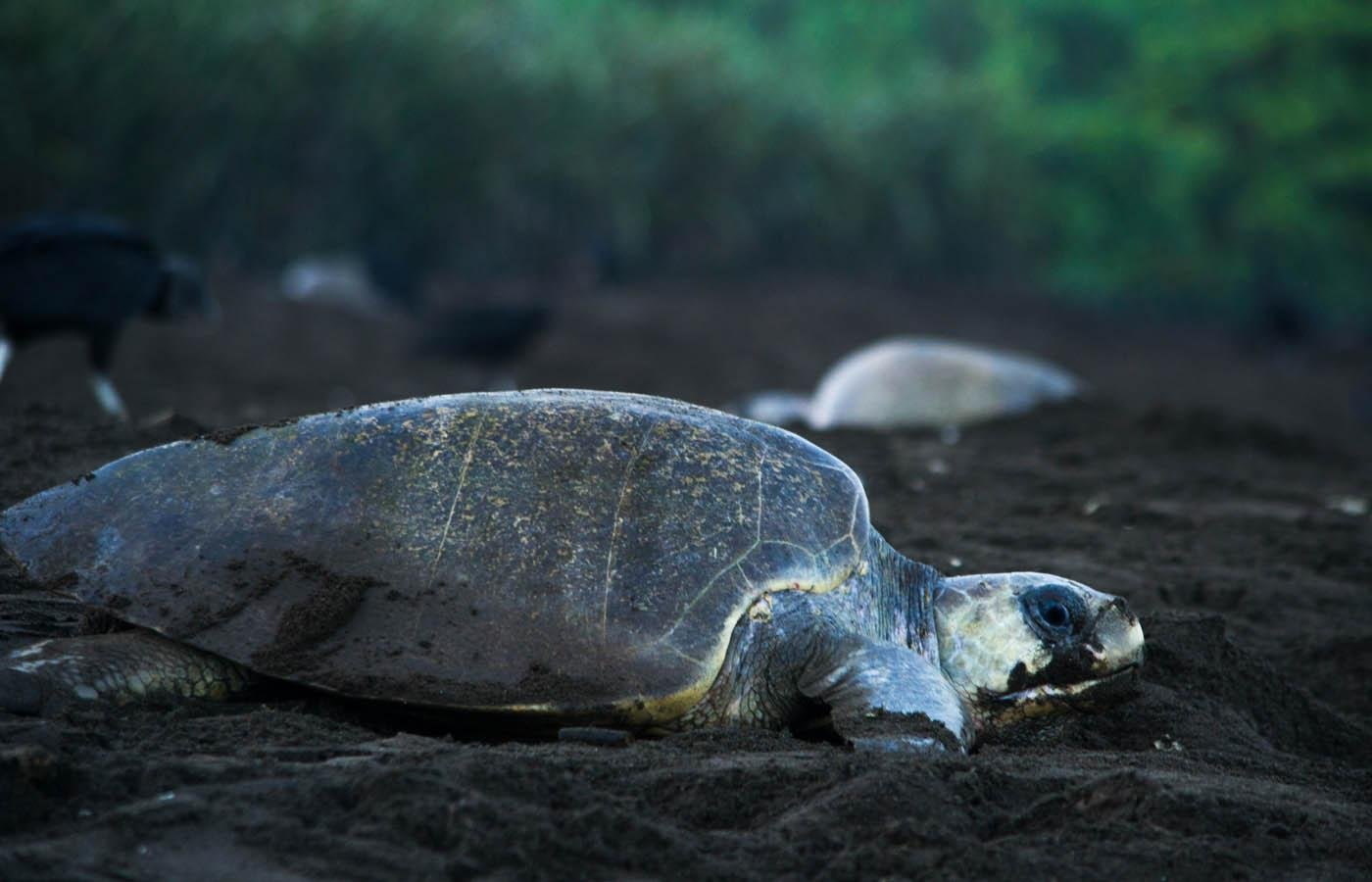
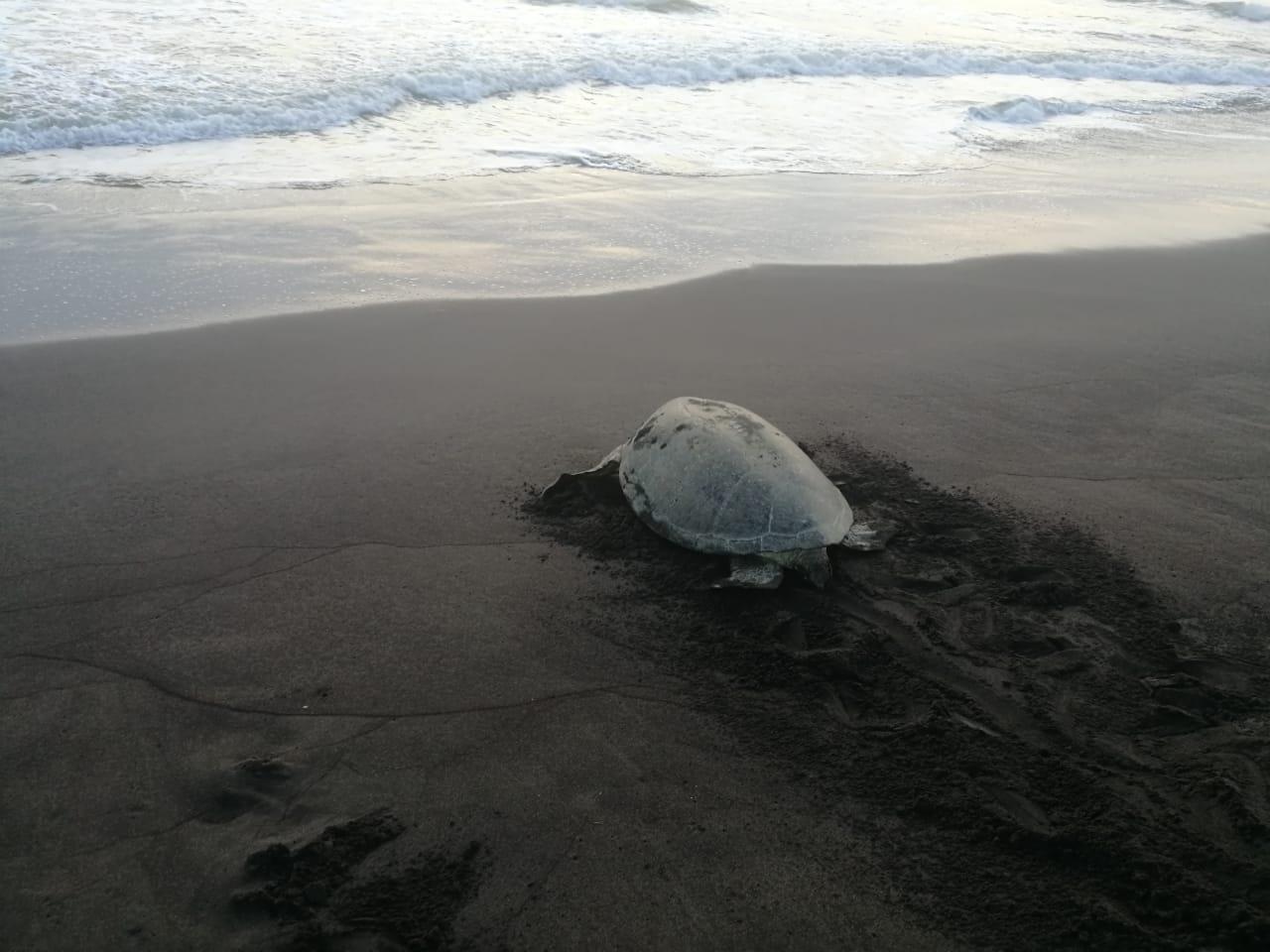
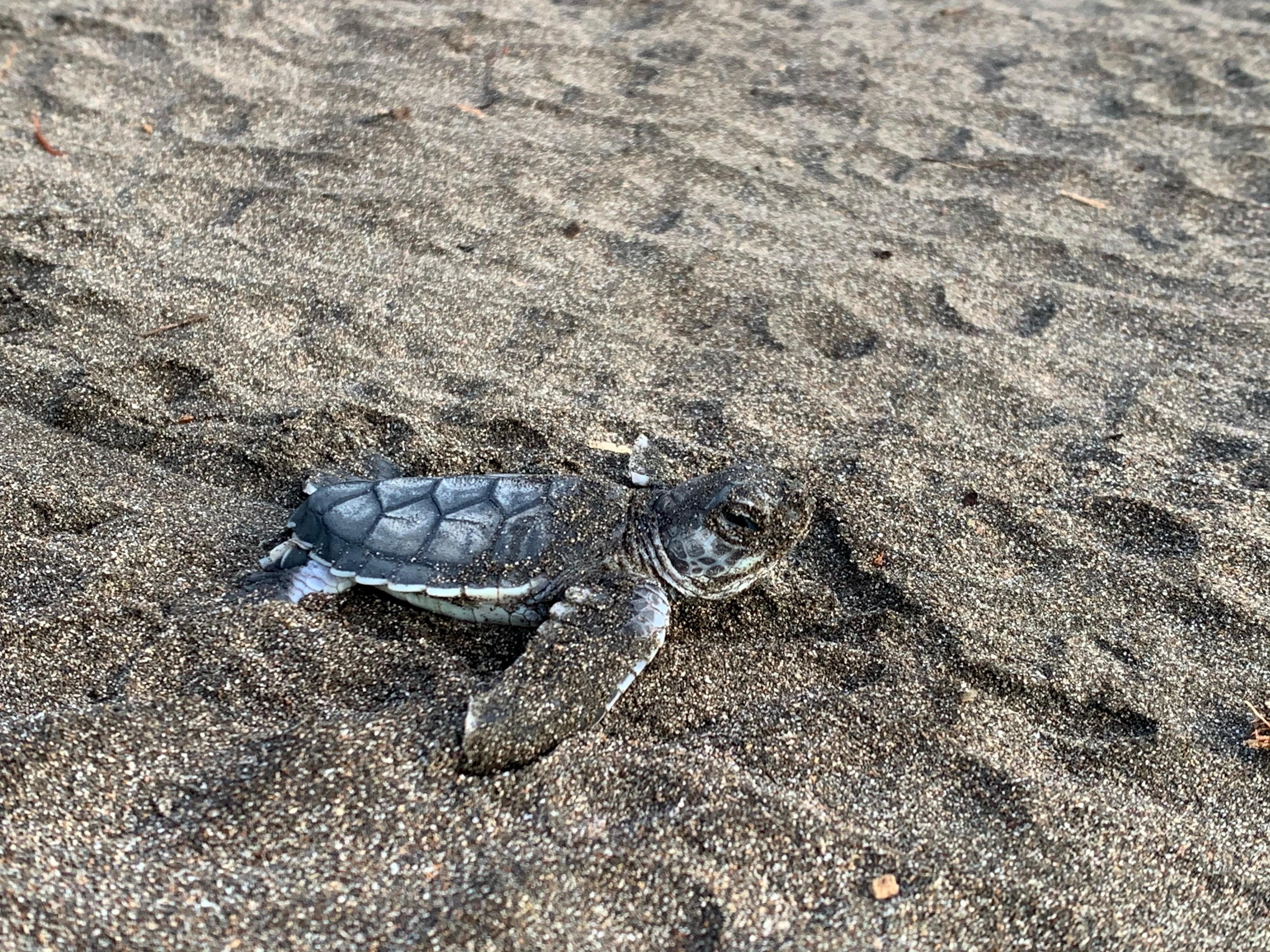
You meet your naturalist guide at the park ranger station as the last daylight fades behind the coastal forest. The group — no more than nine — receives the protocol briefing: red lights only, voices low, no sudden movements once a turtle is sighted. You walk the sand in near darkness, the surf a steady percussion to your left, until the guide's light catches the wide trench of a fresh turtle track. Twenty meters up the beach, a green sea turtle the size of a car hood is motionless, her rear flippers excavating a flask-shaped chamber in the sand. You hold position five meters back and watch her drop two eggs at a time, each the size and texture of a ping-pong ball, into the nest. The process takes thirty minutes. When she begins covering the clutch, sweeping sand with her front flippers in wide, deliberate arcs, the guide signals that you may move closer. If you join a tour during hatching season, the experience shifts: you arrive at a cordoned hatchery site where a nest is beginning to "boil" — the sand surface rippling as dozens of hatchlings push upward. Within minutes, the first dark shapes break the surface and begin their disoriented scramble toward the brightest horizon, which on a moonless night is the white foam of the breakers. You walk parallel to them, red light tracing their path, until the first wave takes them.
The park is open daily from 06:00–12:00 and 13:00–16:00.
Yes, you must book your visit online to pay the required 16.95 USD conservation fee.
Yes, every visitor must pay the 16.95 USD conservation fee for access to the park.
You should bring insect repellent, rain gear, and wear dark clothing for the best experience.
Flash photography is strictly prohibited as it harms the turtles during the hatching tour.
Yes, families are welcome, but children must remain quiet and under strict adult supervision.
August is an excellent time to witness hatchlings, with peak activity occurring early in the season.
Most visitors arrive by boat from La Pavona or Moin to reach the Tortuguero National Park area.
No, large bags are not allowed on the beach to ensure the safety of the nest sites.
Tours typically proceed in the rain unless conditions become dangerous, as turtles still hatch in wet weather.